
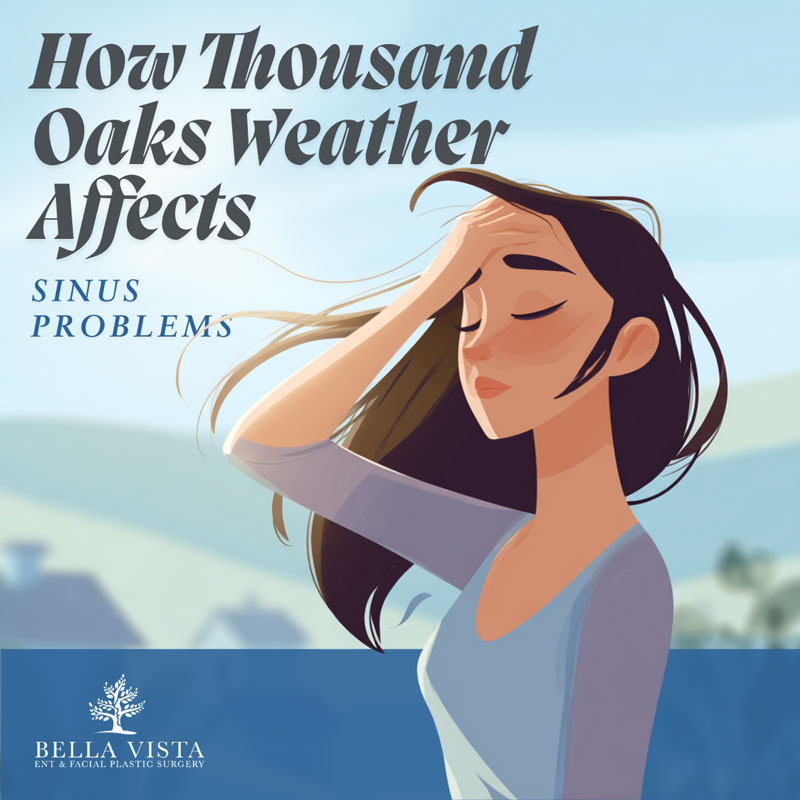
How Thousand Oaks Weather Affects Sinus Problems
If you live in Thousand Oaks, you may notice your sinuses act up when the weather changes. Bella Vista ENT often sees patients who feel fine one week, then suddenly deal with pressure, congestion, or headaches the next. Weather in this area is generally mild, but it still shifts in ways that can affect how your nose and sinuses function.
Your sinuses are sensitive air spaces within your face that help filter and humidify the air you breathe. When the air changes in temperature, humidity, or pressure, your sinuses have to adjust. That adjustment is often when symptoms begin.
Mild but Shifting Temperatures Can Trigger Symptoms
Thousand Oaks is known for its generally mild climate, but temperatures can still shift between warm days and cooler nights. These changes can affect the lining of your nasal passages.
When temperatures drop:
- Blood vessels in the nose can narrow
- The nasal lining may swell slightly
- Breathing through the nose may feel tighter
When temperatures rise quickly:
- The nose may produce more mucus
- Irritation can increase, especially in dry heat
- Congestion may feel more noticeable
Even small changes can matter if your sinuses are already sensitive.
Dry Air Can Make Mucus Thicker
Parts of California, including Thousand Oaks, often experience dry air, especially during certain seasons or windy conditions. Dry air can pull moisture from the nose and sinuses.
When this happens:
- Mucus becomes thicker and harder to clear
- The nose may feel dry or irritated
- Sinus drainage can slow down
Thicker mucus can lead to pressure buildup, especially around the forehead, cheeks, and eyes. This is one reason people feel “stuck” or blocked even without a cold.
Santa Ana Winds Can Bring Irritants
One of the most noticeable weather patterns in Southern California is the Santa Ana winds. These are dry, strong winds that move through the region and can carry dust, pollen, and other small particles.
When these winds are active, you may notice:
- Sneezing or runny nose
- Increased sinus pressure
- Dry or scratchy nasal passages
- Headaches
Even people without strong allergies can feel irritation during windy conditions because the air becomes filled with particles that inflame the nasal lining.
Barometric Pressure Changes Can Cause Sinus Pressure
Barometric pressure refers to the weight of air in the atmosphere. When weather systems change, this pressure shifts. Your sinuses are air-filled spaces, so they respond to these changes.
When pressure drops before a weather change:
- Sinus air expands slightly
- Blocked sinus openings can trap pressure
- You may feel pain in the forehead or cheeks
This is often felt as a dull headache or facial pressure that seems tied to weather changes.
Seasonal Allergies Add to Weather Effects
Thousand Oaks has seasonal pollen that can worsen sinus symptoms. When pollen levels rise, your nasal lining reacts by becoming inflamed.
Common symptoms include:
- Sneezing
- Itchy nose or eyes
- Runny or stuffy nose
- Postnasal drip
When allergies combine with dry air or wind, symptoms can feel much stronger. The nasal lining is already irritated, so even small weather changes can trigger discomfort.
Indoor Air Plays a Role Too
Weather outside often affects the air inside your home or office. During hot or windy days, windows may stay closed, and air conditioning systems run more often.
This can lead to:
- Dry indoor air
- Dust buildup
- Reduced airflow in rooms
Dry indoor air can worsen sinus dryness, while dust can trigger irritation. Many patients notice symptoms are just as strong indoors as they are outside.
When Weather-Related Symptoms Are More Than Just Weather
It is normal to feel mild sinus changes with weather shifts. But there are signs when it may be more than simple sensitivity.
These include:
- Symptoms lasting more than 10–12 weeks
- Frequent sinus infections
- Constant nasal blockage
- Facial pain that does not improve
- Poor sleep due to congestion
When symptoms are this persistent, there may be an underlying sinus condition such as chronic inflammation, structural blockage, or ongoing allergy issues.
Simple Ways to Reduce Weather Triggers
You can reduce sinus discomfort by supporting how your nose handles air changes:
- Use saline spray to keep nasal passages moist
- Drink enough water throughout the day
- Use a humidifier when indoor air feels dry
- Limit exposure during high wind or pollen days
- Keep indoor spaces clean and dust-free
- Shower after being outdoors during windy conditions
These steps help reduce irritation and support normal mucus flow.
Managing Sinus Health in Thousand Oaks Weather
Bella Vista ENT helps patients understand how Thousand Oaks weather patterns affect their sinus health and why symptoms often flare up with environmental changes. While the climate is generally mild, shifts in temperature, wind, humidity, and pressure can still trigger real sinus discomfort.
If these symptoms are becoming frequent or harder to manage, it may be time to look deeper into what may be contributing to your symptoms and discuss potential treatment options. Call us to schedule an appointment today!
Results may vary: Treatment outcomes and health experiences may differ based on individual medical history, condition severity, and response to care.
Emergency Notice: If you are experiencing a medical emergency, call 911 or seek immediate medical attention.
Medically Reviewed and Approved by Jeffrey K. Feinfield, MD, FACS September 25, 2026
One of the most frustrating things about sinus problems is…

Thousand Oaks has a reputation for clean air, open space, and the kind of outdoor lifestyle that makes Ventura County one of the most desirable…