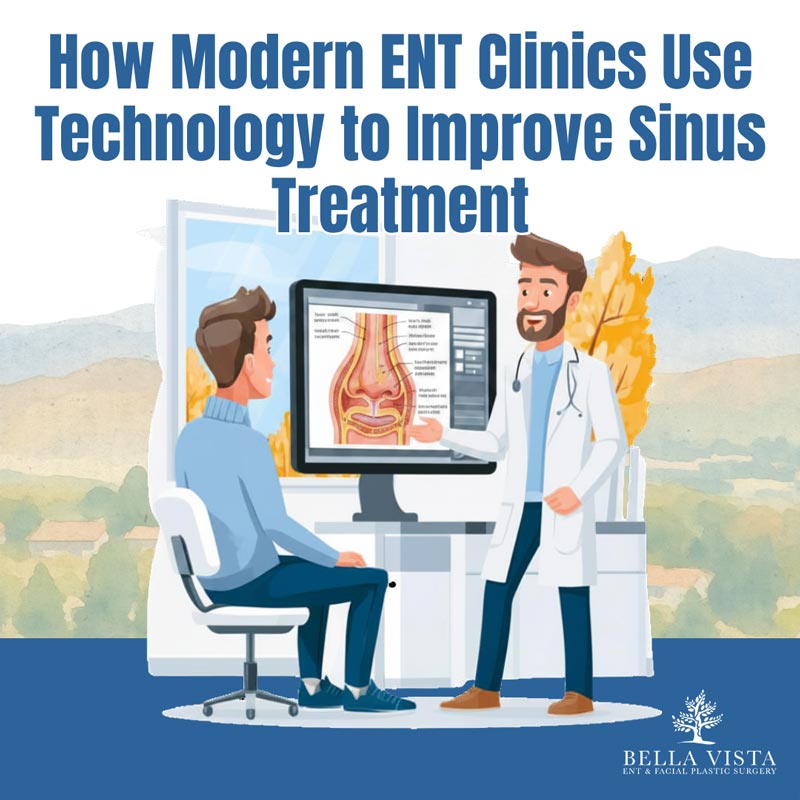
How Modern ENT Clinics Use Technology to Improve Sinus Treatment
Imagine waking up with common and frustrating sinus issues such as nasal congestion, breathing difficulties, sinus pressure, runny nose, and nasal discharge. When left untreated and unmanaged, they can start affecting your day-to-day life, concentration, productivity, sleep, and overall comfort.
While these issues can be frustrating, ENT medicine has seen technological advancements that offer support for the evaluation, diagnosis, treatment, and management of several ENT issues and conditions.
This article from Bella Vista ENT can help patients in Thousand Oaks, CA, understand how ENT clinics utilize technologies to advance and improve sinus care and treatment.
The Importance of New ENT Technologies to Support Improved Sinus Treatment in Thousand Oaks, CA
✅New ENT technological advancements support accurate testing, evaluation, and diagnosis
Technological advancements in ENT medicine support the accurate testing and diagnosis of an array of ENT issues and conditions. Accurate diagnosis allows ENT doctors to determine what might be potentially causing persistent sinus issues and how these might be affecting the patient’s overall health and well-being.
✅New ENT technological advancements support individualized sinus treatment planning
Accurate testing, evaluation, and diagnosis allow ENT doctors to create personalized treatment and management plans according to each patient’s clinical findings, medical history, symptoms, treatment responses, personal health goals, and other individual health factors.
✅New ENT technological advancements support the development and use of minimally invasive sinus treatments and procedures
The rise and continued development of ENT technologies have given way to the development and increasing use of minimally invasive sinus treatments and procedures. While individual results vary significantly per patient, these minimally invasive procedures generally have minimal discomfort and quick recovery times. Your ENT care provider will thoroughly explain procedures, expected results, potential side effects, and possible alternatives.
ENT Technologies That Help Improve Sinus Care and Treatment
#1: High-resolution and 3D imaging
The development and advancement of high-resolution and 3D imaging technologies have allowed ENT doctors and surgeons to acquire a clear and highly detailed image of the complex maps and structures of the sinuses. This has allowed care providers to assess the patient’s sinus anatomy, which guides personalized treatment planning.
#2: Image-guided surgery
More than providing highly detailed images of the complex sinus structures, image-guided surgery in ENT medicine also provides real-time navigation and guidance during certain sinus surgeries and procedures.
#3: Minimally invasive procedures and treatments
Technological advancements in ENT medicine have allowed for the development and increasing adoption of minimally invasive sinus treatments and procedures, such as:
- Endoscopic sinus surgery
Endoscopic sinus surgery (ESS) is a minimally invasive procedure that uses an instrument with a light and a camera on one end, called an endoscope. The endoscope is inserted into the affected sinus cavity and works by providing a clear, precise, and detailed view of the sinus passages. This procedure may be recommended for persistent nasal obstruction due to nasal polyps, which are excess nasal tissue growth that could potentially block the nasal passages and cause persistent nasal congestion and breathing difficulties. - Balloon sinuplasty
Balloon sinuplasty is a minimally invasive procedure designed to potentially open and widen blocked sinus passages. It uses a small, flexible balloon catheter that is inserted into the affected sinus cavity. Once in place, the balloon is gently inflated. This may help improve sinus flow and drainage in clinically appropriate patients. Then, the balloon is deflated and removed.Benefits may include minimal discomfort and a quick recovery time. However, as with any medical procedure, there are potential risks and side effects, such as irritation, bleeding, and symptom recurrence.
Your ENT care provider will review your clinical findings, symptom severity, and nasal anatomy to determine if balloon sinuplasty may be considered an alternative to traditional sinus surgery.
- Radiofrequency ablation
Radiofrequency ablation is a minimally invasive procedure that uses radiofrequency technology to potentially shrink chronically swollen nasal tissues that may be causing persistent nasal blockages. This is generally well-tolerated by many patients. However, there are potential risks and side effects, including dryness, bleeding, or discomfort in the treatment area. - Laser therapies
Laser therapies may be recommended to address persistent nasal obstruction due to swollen nasal tissues that do not respond well to other forms of treatment, such as medications or nasal sprays. There are potential risks, such as swelling and bleeding in the treatment area.Keep in mind that laser therapies are not yet universally adopted and may not be suitable for all patients. Your ENT doctor can help assess your symptoms, nasal anatomy, medical history, and response to previous treatments to determine if this may be the appropriate treatment for you.
#4: Targeted drug delivery systems
The development and adoption of targeted drug delivery systems allow medications to be delivered directly to the treatment area in selected clinical situations. In some post-operative cases, some ENTs may use FDA-approved biodegradable stents to release medications, such as corticosteroids, directly into the sinus cavity.
#5: Telemedicine and remote monitoring
Telemedicine has allowed patients to consult with their healthcare providers remotely, often via video calls. Moreover, remote monitoring technology has allowed care providers to remotely access patient data, monitor symptoms, and track treatment responses. This allows necessary treatment adjustments and continuity of care even remotely.
Conclusion: Looking for an ENT Doctor Near Me in Thousand Oaks, CA
Bella Vista ENT provides ear, nose, and throat care services in Thousand Oaks, Westlake Village, Agoura Hills, Newbury Park, and surrounding areas. If you’ve been dealing with persistent sinus issues that don’t seem to respond well with conservative treatment methods, contact our team for a consultation to learn more about the diagnostic technologies and treatment options we offer for sinus care and management.

Common sinus issues such as nasal congestion, postnasal drip, sinus pressure, headaches, and a runny nose can be frustrating, especially if they…
If you find yourself dealing with persistent sinus issues such as nasal obstruction, breathing difficulties, postnasal drip, frequent sneezing, and…