
Allergy Season in Thousand Oaks: What Ent Specialists Want You to Know
Allergy Season in Thousand Oaks: What ENT Specialists Want You to Know
Seasonal allergies can affect Thousand Oaks residents at different times throughout the year. Local pollen levels can vary based on vegetation, weather conditions, and seasonal changes, meaning allergy triggers may shift from one season to the next.
Trees, grasses, and weeds release pollen at different times of the year, while other environmental allergens may also contribute to symptoms. Understanding these patterns can help you recognize potential triggers and take appropriate steps to manage your symptoms.
This guide from Bella Vista ENT explains what to know about allergy season in Thousand Oaks, CA, including common seasonal triggers, allergy symptoms, and practical ways to reduce exposure and manage symptoms.
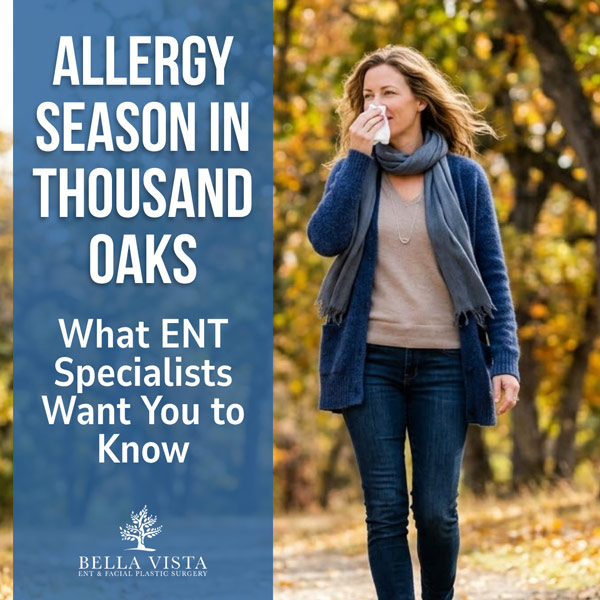
What Are Seasonal Allergies?
Seasonal allergies (also known as allergic rhinitis or hay fever) are allergies that are triggered by exposure to pollen released by plants, trees, and grasses.
As the name suggests, seasonal allergies occur during certain seasons or times in the year. Because plants release pollen at various times of the year, you may develop allergy symptoms only during certain seasons or throughout the year, depending on what triggers your allergies.
Common symptoms of seasonal allergies include:
- Frequent and uncontrollable sneezing
- Nasal congestion and breathing difficulties through the nose
- Itchy, watery, and red eyes
- Coughing
- Runny nose with thin, clear, and watery discharge
- Postnasal drip, or mucus dripping down the back of the throat
- Itchy nose, throat, or roof of the mouth
- Lack of or poor quality sleep, causing daytime sleepiness and fatigue
What You Should Know About the Allergy Season in Thousand Oaks, CA
Thousand Oaks residents, like the rest of California, enjoy daily warm weather all year round. They don’t have to deal with cold and harsh winters. Moreover, the coastal weather patterns can help keep pollen levels low. However, residents can still experience allergy symptoms throughout the year, depending on their triggers.
Here’s a quick breakdown of California’s allergy season you should be familiar with:
- Spring (March to May)
Spring season in Thousand Oaks and the rest of California is tree allergy season. Residents should watch out for the main culprits during this time of the year, including oak, cedar, and pine trees. Late April and May can also see a rise in Bermuda grass pollen, which may start causing problems at this time.
- Summer (June to August)
Grass pollen continues to rise during this time and cause problems for many residents, particularly Bermuda grass, ryegrass, and bluegrass. The month of August also marks the beginning of weed pollen season, with ragweed starting to cause problems during this time.
- Fall (September to November)
The fall season is weed pollen season in Thousand Oaks and the rest of California. The main culprits during this time include ragweed and sagebrush. Additionally, residents should be wary of increased mold spores in the air, as these thrive in damp and moist environments, which can be more common after autumn rains.
- Winter (December to February)
The winter season in Thousand Oaks can cause generally lower outdoor pollen and allergen levels. But as people spend more time indoors, indoor allergens such as mold spores, dust mites, and pet dander can be particularly problematic for sensitive individuals.
Tips and Strategies to Manage Allergy Symptoms in Thousand Oaks, CA
✅Learn ways to limit your exposure to potential allergens and triggers
While you can’t 100% avoid exposing yourself to potential allergens and triggers, there are several ways to limit and minimize exposure:
- Begin your day by tracking and monitoring daily pollen and allergen forecasts, and plan your day accordingly. Consider limiting outdoor activities when pollen counts are high, particularly if high pollen levels tend to worsen your symptoms.
- Keep your windows closed, especially during high pollen seasons and windy days to keep allergens and triggers out of your home.
- Keep your home and space clean and free from allergens and irritants. Wear appropriate protective gear if you’re mowing the lawn, trimming trees, or removing weeds.
- Pick the right time to head out. Usually, pollen levels are at their lowest at night.
- If you’re heading out, make sure to wear a protective mask to keep allergens and triggers out of your airways.
- Once you get home from spending time outside, immediately change out of your outdoor clothes, take a shower, and get a new set of clothes to wash off allergens and irritants you might have picked up from your time outside.
- Use high-quality HEPA filters in your home’s AC system and vacuum cleaners to filter out allergens and irritants.
✅Try Over-The-Counter Medications to Support Allergy Symptom Management
Some patients may find that over-the-counter medications can help support symptom management. These medications may include:
- Antihistamines
- Decongestants
- Saline nasal sprays
- Pain relievers
- Eye drops
Ask a healthcare professional or pharmacist which over-the-counter options are appropriate for you, particularly if you have other medical conditions or take other medications.
✅Inquire About the Possibility of Allergy Drops
Your ENT doctor in Thousand Oaks, CA, may be able to recommend sublingual immunotherapy or allergy drops if your allergy symptoms do not respond to other forms of treatment, depending on clinical findings, symptom severity, and personal health goals.
Allergy drops may be a recommended alternative to allergy shots, and may be preferred by some patients who are looking for a treatment option with minimal doctor visits or needle-averse patients.
A consultation with your ENT care provider can help assess your condition and determine if this may be the appropriate treatment approach for your condition.
An important note about FDA approval:
In the United States, certain sublingual immunotherapy tablets are FDA-approved for specific allergens. Custom-compounded sublingual allergy drops are not FDA-approved, although healthcare providers may prescribe them off-label when clinically appropriate.
Learn More About Your Allergy Triggers With Bella Vista Ent
Bella Vista ENT provides ear, nose, and throat care services in Thousand Oaks, Westlake Village, Newbury Park, Camarillo, Agoura Hills, and the surrounding California communities. We offer comprehensive sinus evaluations, allergy testing, and personalized treatment planning based on each patient’s unique allergy profiles, symptoms, and other individual health factors.
If you are experiencing chronic allergy symptoms, get in touch with our team to find out how we can help.
Common sinus issues such as nasal congestion, postnasal drip, sinus pressure, headaches, and a runny nose can be frustrating, especially if they…
If you find yourself dealing with persistent sinus issues such as nasal obstruction, breathing difficulties, postnasal drip, frequent sneezing, and…