
Could Nasal Obstruction Be Contributing to Mouth Breathing and Poor Sleep?
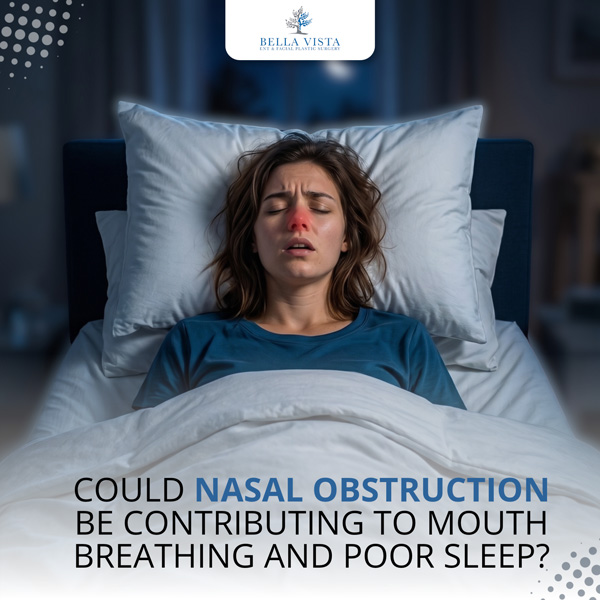
Imagine waking up with a dry mouth, an irritated and sore throat, or an unending feeling of tiredness despite getting a full night’s sleep. This can be frustrating, even more so when you notice yourself resorting to mouth breathing, which may contribute to poor sleep quality.
These experiences can result from several causes and contributing factors. One of these factors is nasal obstruction, which can occur when airflow through the nasal passages is restricted, making it difficult to breathe through the nose.
When breathing through the nose becomes a chore, you may naturally resort to mouth breathing, particularly during sleep, which may contribute to poor sleep quality.
Here at Bella Vista ENT, we help patients understand nasal obstruction, as well as how and when it may contribute to mouth breathing and affect sleep quality.
What Is Nasal Obstruction?
Nasal obstruction is a blockage or restriction of airflow through one or both nasal passages. It’s often described as a feeling as if there isn’t enough air flowing through your nose and occurs when a condition or injury causes partial or complete blockage in the nasal airway.
Some individuals may experience occasional nasal obstruction, particularly during allergy season or when they are dealing with respiratory infections.
Common causes of nasal obstruction may include:
- Allergic and nonallergic rhinitis: Both allergic and nonallergic rhinitis can cause chronic swelling and inflammation of the nasal and sinus lining. It may cause nasal congestion, sneezing, a runny nose, postnasal drip, and thin and watery nasal discharge. These symptoms may also become more noticeable during sleep.
- A deviated septum: A deviated septum is an anatomical variation in which the nasal septum, the thin wall of bone and cartilage that separates the nose into left and right nostrils, is off-center and misaligned. When present, it can narrow the available space for airflow and cause persistent nasal obstruction, especially through one side of the nose.
- Nasal polyps: Nasal polyps are soft, noncancerous growths that can be associated with inflammation in the nasal and sinus lining. Depending on their size and location, nasal polyps may contribute to nasal obstruction, persistent nasal congestion, and breathing difficulties through the nose.
- Enlarged turbinates: The turbinates are structures inside the nose that help filter, humidify, and warm inhaled air. Sometimes, these structures can become swollen and enlarged due to chronic inflammation, allergies, and other factors, and restrict nasal airflow.
- Nasal valve collapse: The nasal valve is a narrow region in the nasal airway. Sometimes, this region weakens or collapses, which can restrict airflow and contribute to nasal obstruction, particularly during inhalation.
How Can Nasal Obstruction Contribute to Mouth Breathing?
During normal function, the nose filters, humidifies, and warms the air we breathe, and delivers this conditioned air to the respiratory system. However, sometimes, the nasal passages can become narrowed or blocked, which causes nasal obstruction and congestion. This can make it feel like breathing through the nose is a chore.
As a result, some individuals resort to mouth breathing, which can become more noticeable at night, during sleep.
Signs that you may be resorting to mouth breathing during sleep include:
- Waking up with a dry mouth or throat
- An irritated or sore throat
- Dry or cracked lips in the morning
- Noticeable drooling during sleep
- Sleeping with an open mouth, which can be observed by another person that you sleep with
- Frequently waking up thirsty
These symptoms do not automatically point to mouth breathing due to nasal obstruction. Other medical conditions may be associated with these symptoms.
How Can Nasal Obstruction Contribute to Poor Sleep?
Persistent nasal obstruction may contribute to nighttime breathing difficulties and discomfort, which may also affect sleep quality. Nasal obstruction, in a way, can contribute to poor sleep quality in several ways:
- Increased mouth breathing: Persistent nasal obstruction may cause increased reliance on mouth breathing, especially during sleep. This may cause a dry mouth, throat irritation, and sometimes even poor sleep quality.
- Snoring: Snoring occurs when tissues in the upper airway vibrate during sleep. Nasal obstruction causes increased resistance to nasal airflow and may contribute to snoring.
- Difficulty staying asleep: Persistent nasal obstruction and breathing difficulties may cause constant waking during the night due to discomfort. These sleep disturbances may cause fragmented sleep patterns, poor sleep quality, and a constant feeling of tiredness during the day.
- Fatigue upon waking up: Sleep disturbances, discomfort at night, and persistent breathing difficulties during sleep may cause individuals to wake up feeling tired or unrefreshed, despite what seems like a full sleep.
The symptoms above do not automatically mean that there is nasal obstruction. Other sleep disorders and medical conditions may contribute and should be considered.
Does Nasal Obstruction Cause Sleep Apnea?
Nasal obstruction and obstructive sleep apnea (OSA) can occur together but are not the same condition. Moreover, nasal obstruction does not automatically cause sleep apnea, and correcting the cause of nasal obstruction does not automatically resolve OSA.
When Is It Time to See an ENT Specialist for Nasal Obstruction, Mouth Breathing, and Poor Sleep Quality
Occasional nasal obstruction, mouth breathing, and poor sleep quality may improve when the underlying condition resolves.
You may consider scheduling an ENT appointment if you are experiencing:
- Persistent breathing difficulties through one or both sides of the nose
- Chronic nasal congestion affecting day-to-day activities and comfort
- Frequent reliance on mouth breathing during sleep
- Nasal blockage that persists despite treatment
- Recurring sleep disturbances accompanied by nasal breathing issues
- Persistent snoring occurring alongside nasal obstruction
Conclusion: Understanding the Link Between Nasal Obstruction, Mouth Breathing, and Poor Sleep
Bella Vista ENT provides ear, nose, and throat care services for patients in Thousand Oaks, Camarillo, Simi Valley, and the surrounding Ventura County communities. Schedule a consultation with our team to learn more about nasal obstruction and how it may contribute to mouth breathing and poor sleep quality.

Allergy Season in Thousand Oaks: What ENT Specialists Want You to Know
Seasonal allergies can affect Thousand Oaks residents at different times…

Medically Reviewed and Approved by Jeffrey K. Feinfield, MD, FACS September 25, 2026
Imagine waking up with a runny nose, uncontrollable sneezing,…