
Loss of Smell: Could Sinus Inflammation or Nasal Polyps Be Responsible?
Our sense of smell plays an important role in our everyday lives. We use our sense of smell to recognize familiar scents and fully enjoy the food we eat. Sometimes, however, our sense of smell weakens or even disappears. When this happens, our enjoyment of food, scents, and daily experiences can decrease.
While mild or temporary changes in our sense of smell can occur with respiratory illnesses, such as the common cold or flu, persistent or worsening smell loss can point to an underlying condition that may need additional evaluation, testing, and treatment.
Two possible causes of smell loss are chronic sinus inflammation and nasal polyps. These conditions are closely related and may occur together. Both can interfere with how our sense of smell works.
Here at Bella Vista ENT, we help patients in Thousand Oaks, CA, understand how sinus inflammation and nasal polyps can affect the sense of smell and recognize when it may be time to see an ENT specialist for persistent concerns.
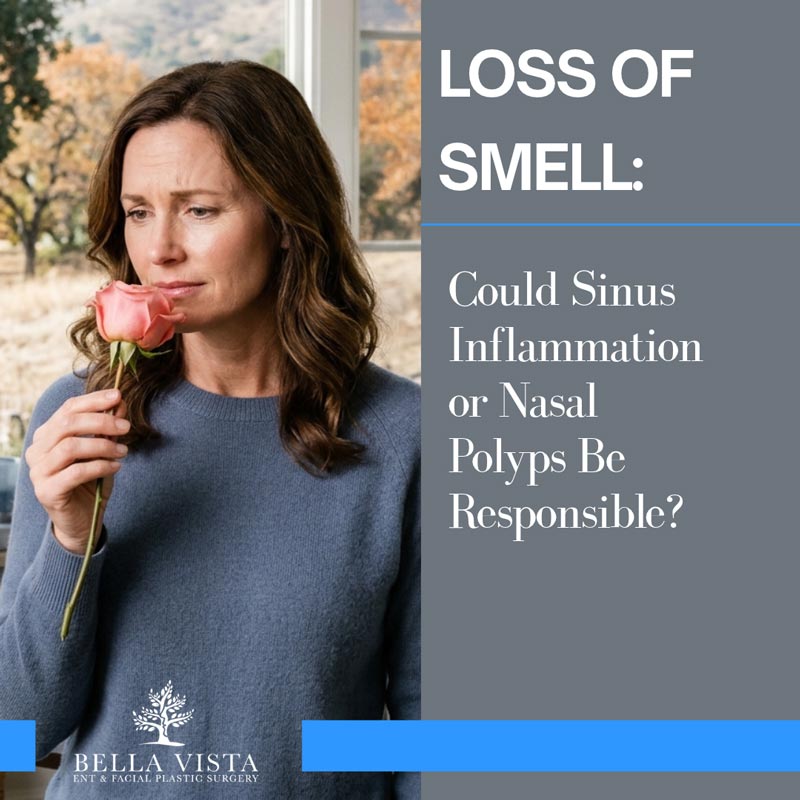
Can Sinus Inflammation or Nasal Polyps Cause Loss of Smell?
Yes, both chronic sinus inflammation and nasal polyps can contribute to a reduced sense of smell or a complete loss of smell.
Chronic sinusitis involves persistent inflammation and swelling in the nasal and sinus passages, which may also affect areas near the smell receptors in the nose. This may interfere with odor detection.
Similarly, nasal polyps can develop along the nasal and sinus linings and may obstruct airflow toward the smell receptors in the nose.
However, it’s important to remember that not all cases of smell loss are due to sinus inflammation or nasal polyps. Other factors, such as viral infections, head injuries, age-related changes, and neurological conditions, may also contribute.
An ENT specialist can help evaluate your symptoms, determine the potential underlying cause of your reduced sense of smell, and guide personalized treatment planning.
How the Sense of Smell Works, Briefly Explained
The sense of smell, known as olfaction, primarily depends on specialized sensory cells located high inside the nasal cavity. When we breathe through our nose, airborne odor molecules travel into the nasal passages and reach an area called the olfactory epithelium.
This small area of tissue contains sensory cells with smell receptors that detect odor molecules and send signals to the brain. This process allows us to recognize different smells.
Swelling, inflammation, or physical obstruction can interfere with this process and contribute to changes in the sense of smell.
How Can Chronic Sinus Inflammation Affect Your Sense of Smell?
Chronic rhinosinusitis is characterized by persistent inflammation in the nose and paranasal sinuses, with symptoms lasting for 12 weeks or more.
It may cause symptoms such as:
- Chronic nasal congestion
- Facial and sinus pressure
- Thick nasal discharge
- Postnasal drip, or mucus dripping down the back of the throat
- A reduced sense of smell
There are two primary ways in which chronic sinus inflammation can interfere with the sense of smell:
- Sinus inflammation can limit airflow that reaches the smell receptors
Chronic sinus inflammation can cause swelling in the nasal passages, which may narrow the spaces through which air passes. This narrowing can make it difficult for odor molecules to reach the olfactory region. As a result, scents may seem weaker or more difficult to identify.
- Sinus inflammation can affect the smell-sensing tissue
In some cases, loss of smell is not caused solely by a physical blockage that prevents odor molecules from reaching the smell receptors.
Chronic sinus inflammation can also affect the smell-sensing tissue in the nasal passages, known as the olfactory epithelium. This may interfere with the normal function of the smell receptors.
This mechanism helps explain why some people may experience smell loss even when they can breathe comfortably through their noses.
How Can Nasal Polyps Affect Your Sense of Smell?
Nasal polyps are soft, typically painless, noncancerous (benign) growths that can develop along the lining of the nasal and sinus passages. They are associated with inflammation and may contribute to smell loss in several ways:
- Nasal polyps can cause physical obstruction in the nose
Depending on their size and location, nasal polyps may cause physical obstruction in the nose and interfere with airflow through the nasal passages. Nasal polyps that develop in the upper nasal cavity may prevent odor molecules from reaching the smell receptors.
- Nasal polyps are linked to persistent sinus inflammation
Nasal polyps are closely linked to chronic sinus inflammation, which may affect the tissues responsible for detecting smells. Even when nasal polyps do not cause severe nasal obstruction, associated inflammation may still interfere with the function of these smell-detecting tissues.
- Nasal polyps can affect the olfactory region
Nasal polyps and associated inflammation near the olfactory cleft, a narrow space located high inside the nasal cavity that plays a role in smell detection, may interfere with normal smell function.
Can Your Sense of Smell Return After Treatment for Sinus Inflammation or Nasal Polyps?
In some cases, smell function may return or improve after treatment to address sinus inflammation or nasal polyps.
However, improvement in the sense of smell depends on several factors, including the duration and severity of symptoms, the underlying cause of smell loss, the degree of inflammation, and the condition of the olfactory system.
Potential treatment options may include:
- Medical management, which may include saline irrigation, intranasal corticosteroid sprays, and other appropriate medications.
- Endoscopic sinus surgery, which may be recommended for selected patients with chronic rhinosinusitis or nasal polyps when clinical findings support surgical intervention.
- Olfactory training, which may help improve smell function in some patients, depending on the underlying cause of smell loss.
When performing saline nasal irrigation, use distilled, sterile, or previously boiled and cooled water.
An ENT specialist can help determine which treatment options may be appropriate based on your symptoms, medical history, and clinical findings.
Individual treatment outcomes vary, and treatment does not guarantee partial or complete restoration of the sense of smell. Surgical procedures also carry potential risks and complications, which should be discussed with your ENT specialist before treatment.
When Should You See an ENT Specialist for Loss of Smell?
While temporary and mild changes in the sense of smell during upper respiratory infections may improve as the illness resolves, consider seeing an ENT specialist if you are experiencing:
- Smell loss that persists for several weeks without a clear explanation
- A persistent reduction in your sense of smell even after other respiratory symptoms have improved
- Other persistent or recurring sinus symptoms, such as nasal congestion, nasal drainage, or facial and sinus pressure
- Worsening smell loss
- Smell changes that significantly affect day-to-day work, activities, appetite, and comfort
- Recurring or persistent smell loss with a history of chronic sinusitis or nasal polyps
Sudden, unexplained loss of smell should be evaluated promptly.
Seek emergency medical attention if smell loss occurs alongside symptoms such as facial weakness, difficulty speaking, a sudden severe headache, or other acute neurological symptoms.
Staying Safe With a Reduced Sense of Smell
A reduced sense of smell can make it more difficult to detect everyday hazards such as smoke, gas leaks, and spoiled food.
Ensure smoke alarms and appropriate combustible gas detectors are functioning properly, and follow recommended food storage and expiration guidelines. Avoid relying solely on your sense of smell to determine whether food is safe to eat.
These precautions may help reduce everyday safety risks while you undergo evaluation or treatment for persistent smell loss.
Conclusion: Understanding the Cause of Persistent Smell Loss With Bella Vista ENT
Bella Vista ENT provides ear, nose, and throat care services for patients in Thousand Oaks, Camarillo, Simi Valley, and the surrounding Ventura County communities.
Schedule an appointment with our ENT care team to learn more about what might be causing your reduced sense of smell, determine whether sinus inflammation or nasal polyps may be contributing, and explore appropriate treatment options.
Persistent sinus symptoms such as nasal congestion, difficulty breathing through the nose, postnasal drip, sinus pressure, and headaches can be…

Rhinoplasty, sometimes called a nose job, is not always performed for the same reason. Some patients pursue surgery because they want to change the…