
Ringing in the Ears: When to See an ENT
Sometimes tinnitus is easy to shrug off. You hear a faint ringing for a few seconds, get distracted, and move on. But when that sound keeps showing up, starts lasting longer, or begins to pull your attention away from work, sleep, or quiet moments, it can be harder to tell whether it is something minor or something worth checking.
That uncertainty is common. Tinnitus can sound like ringing, but it can also sound like buzzing, humming, hissing, clicking, or even a pulsing noise. It may come and go. It may stay in the background. Or it may become the kind of symptom you keep noticing because it no longer feels random.
At Bella Vista ENT, we know that patients are often not just asking, “Why is this happening?” They are also asking, “Should I be concerned enough to see someone?” That is usually the more useful place to start.
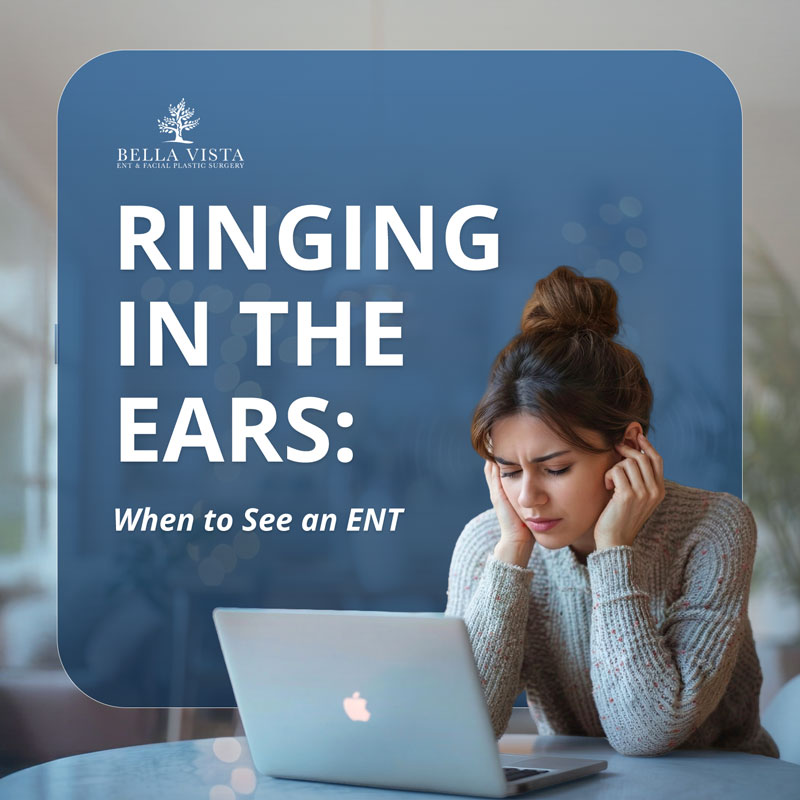
When Ringing in the Ears May Be Worth Checking
A brief episode of ringing after a loud event may not always require immediate care. But if the sound keeps returning, lasts longer than expected, or starts affecting your routine, it may be time to look into it more closely.
Rather than trying to guess whether the sound is serious, it can help to look at the signs that suggest an ENT visit may be a good next step.
Reasons to See an ENT for Ringing in the Ears
The ringing keeps coming back
One of the clearest reasons to see an ENT is recurrence. If the sound fades and then keeps returning, that may mean the symptom is not just a one-time reaction to stress, fatigue, or noise. Even if it is mild, recurring tinnitus deserves attention when it becomes a pattern.
The sound is lasting longer than expected
If ringing in the ears does not go away after a short period of time, it may be worth having it evaluated. Persistent symptoms are often harder to dismiss because they can point to an underlying issue that needs more than simple observation.
It is starting to affect your sleep or concentration
Tinnitus does not have to be painful to be disruptive. Some people find that it becomes most noticeable at night, when everything else is quiet. Others notice that it interferes with focus during work or makes it harder to relax. If the ringing is beginning to affect your sleep, concentration, or daily comfort, that is a reasonable time to seek care.
You are noticing hearing loss or muffled hearing
Ringing in the ears is often linked with hearing changes. If sounds seem dull, speech feels harder to follow, or one ear seems weaker than the other, tinnitus may be part of a bigger hearing concern. When ringing appears with hearing loss, it becomes more important to have it checked.
You feel dizziness, imbalance, or vertigo too
Tinnitus that happens along with dizziness or balance problems deserves more attention. These symptoms together may point to an issue involving the inner ear or another part of the hearing and balance system. That does not always mean something severe is happening, but it does mean the symptom should not be brushed aside.
The ringing is only in one ear
If the sound is clearly coming from one side, that is another reason to schedule an evaluation. One-sided tinnitus can still have a simple explanation, but it is different from general ringing in both ears and should not be ignored, especially if it feels new or persistent.
The sound matches your heartbeat
A pulsing or heartbeat-like sound is different from the more common forms of tinnitus. If the noise seems rhythmic or in sync with your pulse, it is worth medical attention. This kind of symptom may have a different cause and should be properly assessed.
The ringing started suddenly
A sudden change is always worth paying attention to. If tinnitus begins all at once, especially if it feels intense or comes with other symptoms, it is a good idea to have it checked sooner rather than later.
You also have ear pain, pressure, or drainage
Ringing in the ears may sometimes happen with other ear symptoms, such as fullness, discomfort, or drainage. When that happens, the issue may involve more than tinnitus alone. These combinations often call for a closer look.
You keep wondering whether it is normal
Sometimes the biggest sign is uncertainty itself. If you have started noticing tinnitus often enough that you keep thinking about it, searching it online, or wondering whether it is something to worry about, that alone can be a good reason to bring it up with an ENT. A proper evaluation can help put the symptom into context.
What an ENT May Evaluate
When you come in for tinnitus, we look at more than the sound itself. We may ask when it started, whether it is constant or intermittent, whether it affects one ear or both, and whether there have been changes in hearing, balance, or other ear symptoms.
Depending on your symptoms, the evaluation may include:
- a discussion of your symptom history
- an ear exam
- review of hearing changes
- questions about noise exposure or medications
- hearing testing when appropriate
The goal is to better understand what may be contributing to the symptom and whether additional testing or treatment options should be discussed.
Why It Helps to Address Tinnitus Early
Many people wait a long time before mentioning ringing in the ears. That is understandable, especially when it starts out mild. But when tinnitus becomes recurring, distracting, or paired with other symptoms, it makes sense to stop guessing.
Even when the cause is not urgent, the symptom can still be frustrating. Having it evaluated can help clarify what may be going on and what options may be available.
Talk With Us About Ringing in the Ears
Are you noticing ringing in the ears that keeps coming back, lasts longer than expected, or seems to be affecting your hearing, sleep, or focus? We can review your symptoms, discuss possible causes, and explore the evaluation and treatment options that may fit your needs.
Schedule an appointment with Bella Vista ENT today!
Results may vary: Treatment outcomes and health experiences may differ based on individual medical history, condition severity, and response to care.
Emergency Notice: If you are experiencing a medical emergency, call 911 or seek immediate medical attention.

Common sinus issues such as nasal congestion, postnasal drip, sinus pressure, headaches, and a runny nose can be frustrating, especially if they…
If you find yourself dealing with persistent sinus issues such as nasal obstruction, breathing difficulties, postnasal drip, frequent sneezing, and…